
Rainy summers can bring both blessings and challenges for beekeepers. While the abundance of rain may promise lush blooms, it also poses significant risks to honey production and hive health. Managing a beehive during a wet season requires meticulous care, protective gear like full-body beekeeping suits, and smart hive management strategies. In this guide, we explore how beekeepers can overcome the hurdles of a rainy summer to ensure their hives thrive and honey production remains abundant.
1. Understanding the Impact of Rainy Weather on Honey Production
Rainy weather significantly impacts the foraging behavior of honeybees. Extended periods of rain prevent bees from leaving the hive, reducing their ability to collect nectar and pollen. This disruption in foraging activities can lead to a decline in honey stores, which are crucial for colony survival.
Additionally, excessive rain can introduce moisture into the hive, creating a damp environment that promotes mold and fungal growth. A wet hive not only endangers the health of the bees but also compromises the quality of honey production.
Key Tip: Monitor your hive’s moisture levels regularly during the rainy season. Adding an extra layer of ventilation or using moisture-absorbing materials can help keep the interior of the hive dry and conducive for honey production.
2. Protective Gear for Beekeepers in Wet Conditions
Working with bees during a rainy summer requires the right protective gear. Wet weather can make bees more agitated, increasing the likelihood of stings. Full-body beekeeping suits are essential for ensuring safety and comfort during hive inspections in such conditions.
Why Full-Body Beekeeping Suits Matter: These suits provide complete protection against stings, especially when bees are more defensive due to restricted foraging. Opt for suits made from waterproof or water-resistant materials to shield yourself from rain while tending to the hive.
Ventilated Beekeeping Suits for Humid Weather: Rainy summers often bring high humidity levels. Ventilated beekeeping suits help keep you cool and comfortable, even during prolonged hive inspections. Look for suits with mesh panels for better airflow.
Waterproof Accessories: Pair your suit with waterproof gloves and boots to ensure you remain dry and protected while working in wet conditions.
Investing in high-quality protective gear not only safeguards you but also allows you to perform hive management tasks with confidence, regardless of the weather.
3. Rainy Season Hive Management Tips
Managing hives during a rainy summer requires a proactive approach. Here are some essential tips to ensure your bees remain healthy and honey production stays on track:
Hive Inspections During Rainy Seasons: Conduct hive inspections during breaks in the rain. Focus on checking for signs of dampness, mold, and overcrowding. A quick yet thorough inspection can help you address potential issues before they escalate.
Moisture Control in the Hive: Use hive covers and raised stands to protect the colony from rainwater. Adding an inner cover with ventilation holes can help reduce moisture buildup inside the hive. Ensure there’s adequate airflow to keep the hive dry.
Feeding Bees in Wet Weather: Rain can limit natural nectar sources. Supplemental feeding with sugar syrup or fondant can help maintain the colony’s energy levels when foraging opportunities are scarce.
By implementing these hive management strategies, you can mitigate the adverse effects of a rainy summer and keep your bees productive.

4. Common Mistakes to Avoid During a Rainy Summer
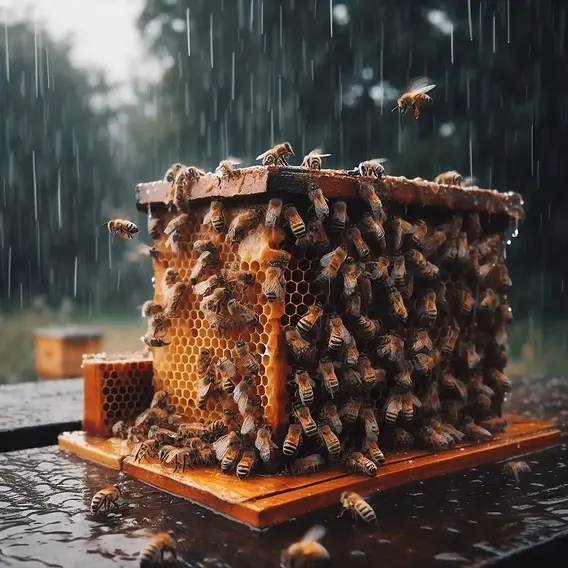
Beekeepers often underestimate the impact of rainy weather on hive health and honey production. Avoid these common mistakes to ensure the success of your colonies:
Neglecting Rainproof Hive Covers: Without adequate protection, rainwater can seep into the hive, causing dampness and endangering the colony. Invest in high-quality, rainproof hive covers.
Ignoring Early Signs of Moisture Issues: Failing to address dampness or mold can lead to severe problems, including brood death and reduced honey quality. Always act promptly when you notice moisture-related issues.
Inadequate Protective Gear: Working in wet conditions without proper gear can result in discomfort and stings. Full-body beekeeping suits, waterproof gloves, and ventilated suits are essential for rainy seasons.
Learning from these common mistakes can save your hive from potential disasters and keep honey production on track.
5. Ensuring Honey Production Remains Abundant
Despite the challenges of a rainy summer, beekeepers can adopt strategies to boost honey production:
Promote Hive Productivity: Ensure the colony has sufficient space by adding supers when necessary. A crowded hive can lead to swarming, further reducing honey stores.
Provide Supplemental Feeding: When nectar sources are scarce, feeding bees with sugar syrup can help sustain their energy levels and support honey production.
Maintain Strong Colonies: A strong, healthy colony is better equipped to withstand adverse weather conditions. Regularly check for signs of pests, diseases, and queen health to ensure your bees remain productive.
By focusing on hive health and providing the necessary support, you can maximize honey production even during a wet season.
Conclusion
Weathering a rainy summer as a beekeeper may seem daunting, but with the right strategies, it is entirely manageable. By investing in full-body beekeeping suits, implementing effective hive management practices, and avoiding common mistakes, you can ensure your hives remain healthy and honey production stays abundant.
Remember, the key to successful beekeeping lies in preparation and adaptability. With these tips, you can turn a rainy summer into a season of productivity and growth for your bees. So suit up, stay dry, and keep your hive buzzing with life.





