
Professional tile installation offers homeowners lasting benefits that go beyond aesthetic appeal. Skilled installers ensure every step—from surface preparation to finishing—is executed with precision, resulting in enhanced structural integrity, resistance to moisture, and an even, flawless finish. This level of quality reduces costly future repairs and improves property value. The choice to hire experienced professionals impacts not just appearance but the tile’s lifespan and performance under daily wear.
This article delivers detailed insights on why professional tile installation matters, technical factors that influence outcomes, and the considerations homeowners must weigh before committing. By focusing on expert installation advantages, this content aims to guide informed decisions that protect investments and improve long-term satisfaction.
Key Benefits of Professional Tile Installation
The difference between a professionally installed tile surface and one done without expertise is often measurable in years of performance and quality. Professionals ensure that foundational errors—such as improper substrate preparation or uneven adhesive application—do not compromise the installation.
One of the strongest benefits lies in substrate assessment and correction. Many DIY or inexperienced installers neglect subtle but critical factors like moisture vapor transmission, surface flatness, and structural movement. Professionals employ tools like laser levels and moisture meters to evaluate the base and recommend corrective measures including leveling compounds or waterproof membranes. This attention prevents issues such as tile lippage (uneven edges), cracking, or adhesive failure.
Additionally, professional installers adapt techniques based on tile material and application area. For example, porcelain requires different mortar types and curing times than natural stone. Wet environments like bathrooms demand integrated waterproofing systems, while floors with heavy foot traffic may call for thicker, high-strength adhesives.
Beyond material handling, pros follow manufacturer guidelines strictly, ensuring warranties remain valid—something often overlooked in non-professional work. As a result, the finished surface withstands environmental stressors better, retaining its appearance and functionality over decades
Comparing Tile Types and Their Installation Complexity
Tile type greatly influences installation approach, materials needed, and skill level. Below is a detailed comparison highlighting key technical and cost factors impacting the installation process and outcome.
Tile Type | Installation Complexity | Adhesive Requirements | Moisture Resistance | Typical Installation Challenges | Cost per Sq. Ft. |
|---|---|---|---|---|---|
Ceramic | Moderate; standard mortar, less cutting complexity | Standard thin-set mortar | High | Requires proper surface prep to avoid cracking | $1 – $5 |
Porcelain | High; denser and harder, requires specialized tools | Polymer-modified thin-set mortar | Very High | Difficult to cut, requires stronger adhesives | $3 – $10 |
Natural Stone | High; porous, requires sealing before and after grouting | Epoxy or urethane adhesives | Moderate | Sensitive to moisture and staining, careful sealing needed | $5 – $15 |
Glass | Moderate; fragile, precise cutting and backing required | White thin-set mortar | High | Fragile, risk of breakage during installation | $7 – $20 |
Vinyl Tile | Low; simpler adhesive, floating floor option | Pressure-sensitive adhesive | Moderate | Substrate must be extremely flat to avoid damage | $1 – $3 |
Professional installers adjust techniques for each tile type, especially with delicate materials like glass or natural stone, which demand precise temperature control and special handling to prevent damage.
Detailed Installation Process with Professional Techniques
Professional tile installation is a carefully sequenced process, each phase critical to preventing premature failure or aesthetic flaws.
- Substrate Evaluation and Preparation: Professionals begin by measuring moisture levels and flatness using specialized equipment. When moisture exceeds acceptable limits, vapor barriers or waterproof membranes are applied. Surface irregularities over 1/8 inch over 10 feet require leveling compounds to create a flat base, preventing uneven tile placement and grout cracking.
- Layout Planning: Skilled installers analyze room dimensions and light sources to design layouts that minimize small cuts along walls and maintain visual symmetry. This step involves dry-laying tiles to ensure pattern consistency and alignment with architectural feaures.
- Precision Cutting: Using wet saws and diamond blades, pros create clean, accurate cuts to fit around fixtures, corners, and edges. This precision reduces chipping and ensures tight grout lines.
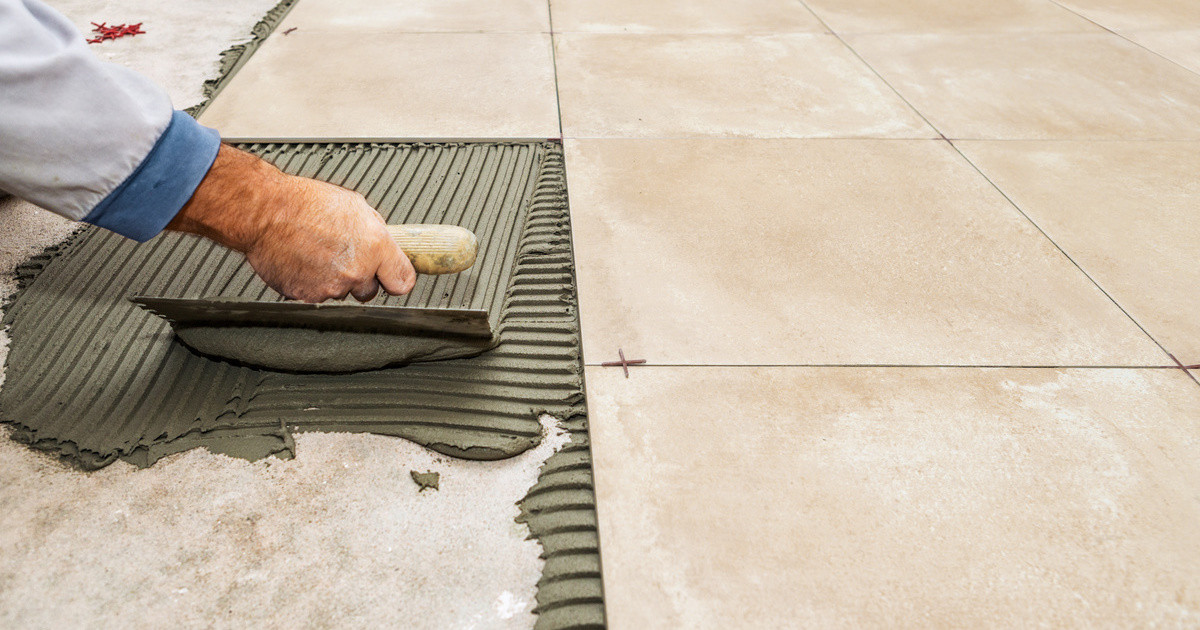
- Adhesive Selection and Application: The choice of adhesive depends on tile type and substrate material. Porcelain often requires polymer-modified mortars with high bonding strength. The application involves troweling adhesive with appropriate notch sizes to guarantee even coverage, which prevents voids under tiles that could cause cracking.
- Tile Placement and Spacing: Installers use tile spacers to maintain consistent grout joints. Proper spacing allows for thermal expansion and contraction without causing tile displacement or grout failure.
- Grouting and Sealing: The grout type is selected based on joint width and tile material—sanded grout for wider joints, unsanded for narrow. Application must fill joints completely to avoid gaps that trap moisture. After curing, sealing is applied to grout and sometimes tile surfaces (especially porous stone) to enhance water resistance and stain protection.
- Final Inspection and Cleanup: Professionals inspect alignment, grout consistency, and surface cleanliness. They remove haze and polish tiles to ensure a flawless finish.
Technical Aspects Impacting Longevity
Term | Impact on Tile Performance |
|---|---|
Substrate Flatness | Imperfections cause stress points, leading to cracks |
Moisture Barrier | Prevents mold and structural damage in wet areas |
Adhesive Coverage | Incomplete coverage results in tile loosening or hollow spots |
Expansion Joints | Allow for thermal movement, preventing grout and tile damage |
Grout Type and Application | Affects joint durability and moisture resistance |
Sealant Quality | Protects porous tiles and grout from staining and degradation |
Correct integration of these elements defines the service life of tile installations. Professionals understand these interactions and adjust their methods accordingly.
Market Data Related to Tile Installation
According to industry analysis, professional tile installation demand has increased due to rising home renovations and real estate turnover. Research shows:
- Over 60% of homeowners cite durability and resale value as top reasons for choosing professional tile work.
- Professional tile installations reduce repair frequency by 40-50% compared to DIY attempts.
- The average cost premium for hiring experts ranges between 20-35%, justified by enhanced longevity and quality.
These figures underscore the practical financial advantage of professional services beyond upfront costs.

Factors to Evaluate Before Hiring Professionals
Before proceeding, homeowners should carefully assess these factors:
- Substrate Condition: In-depth inspection can reveal hidden moisture or structural defects. Professionals should provide recommendations and estimates for necessary repairs.
- Tile Suitability: Different tiles require distinct installation methods. Confirm that the installer has expertise with your chosen material.
- Installer Credentials: Licensing, certifications, and insurance indicate professionalism and adherence to safety standards.
- Detailed Cost Breakdown: Beyond labor, surface preparation, tools, and materials can add costs. A transparent quote prevents surprises.
- Scheduling and Timeline: Large or complex jobs might affect living arrangements; clarify timelines and milestones.
- Warranty Details: Verify coverage scope for labor defects, material failure, and timelines for claims.
Bonus Tip: Ask potential installers to demonstrate previous projects similar in scope and tile type, and request references for firsthand feedback.
Common Concerns Around Professional Tile Installation
What risks does poor installation pose?
Issues include tile cracking, uneven surfaces, grout failure, water infiltration, mold growth, and accelerated wear—all leading to costly repairs or replacement.
How critical is substrate preparation?
It is fundamental. Without a stable, dry, and level base, tile performance deteriorates quickly regardless of material quality.
Can professionals handle custom tile patterns?
Yes. Experienced installers can execute intricate mosaics, diagonal layouts, or mixed-material designs, maintaining alignment and grout consistency.
What factors influence drying and curing times?
Tile type, adhesive, grout, ambient temperature, and humidity all affect curing. Pros control these conditions or advise homeowners on when surfaces are safe to use.
The Advantages of Professional Tile Installation for Homeowners FAQ
Does professional installation extend tile life?
Yes. By addressing underlying issues and using correct materials, professionals increase tile longevity by decades.
Are warranties common with professional tile work?
Most reputable installers offer workmanship warranties between one and five years.
Is the upfront cost justified by benefits?
Reduced repairs, improved aesthetics, and property value gains typically offset higher initial expenses.
Can professionals install tiles over existing flooring?
In some cases, yes, but it requires careful evaluation of the substrate’s integrity and compatibility.
How does professional installation impact home resale?
High-quality tile installation often enhances buyer perception, contributing positively to sale price and speed.
Make the Right Decision
Professional tile installation safeguards the homeowner’s investment by combining technical expertise with appropriate materials and tools. The benefits extend beyond surface beauty to structural integrity, moisture control, and maintenance ease. Evaluating substrate conditions, tile choice, installer qualifications, and warranty options provides clarity before engaging services. Taking these steps ensures the finished surface fulfills both immediate needs and long-term durability expectations.
Reviewer: Chloe Martinez brings 8 years of experience in home improvement. Feedback from Chloe helped shape this post to better support companies working to strengthen their reputation and expand their reach..






