Spinal surgery is a field that demands the utmost precision, often dealing with delicate nerves and complex bone structures. The success of these intricate procedures relies heavily on the specialized spine surgical instruments surgeons employ. These tools are far more than just basic surgical equipment; they are meticulously designed to navigate the unique anatomy of the spine, enabling surgeons to perform life-changing operations with unparalleled accuracy and efficiency.
The Cornerstone of Spinal Procedures: Why Specialized Instruments Matter
The human spine is a marvel of engineering, a column of vertebrae, discs, and nerves that supports the body and protects the spinal cord. When conditions like herniated discs, spinal deformities, or degenerative diseases affect this vital structure, surgical intervention may be necessary. Unlike general surgery, spinal procedures require instruments that can access deep, confined spaces with minimal disruption to surrounding tissues.
Specialized surgery equipment are crucial for several reasons. Firstly, they enhance precision, allowing surgeons to work with minute tolerances around sensitive neurological structures, significantly reducing the risk of complications. Secondly, they contribute to patient safety by minimizing tissue damage, which can lead to faster recovery times and less post-operative pain. Finally, these advanced tools improve surgical efficiency, enabling surgeons to complete complex tasks more quickly and effectively. The ongoing innovation in medical technology continually refines these instruments, paving the way for less invasive techniques and improved patient outcomes.
A Closer Look at Essential Spine Surgical Instruments
The array of instruments used in spinal surgery is diverse, each designed for a specific role in different stages of a procedure. Understanding these categories helps to appreciate the complexity and sophistication involved.
Cutting and Dissecting Instruments:
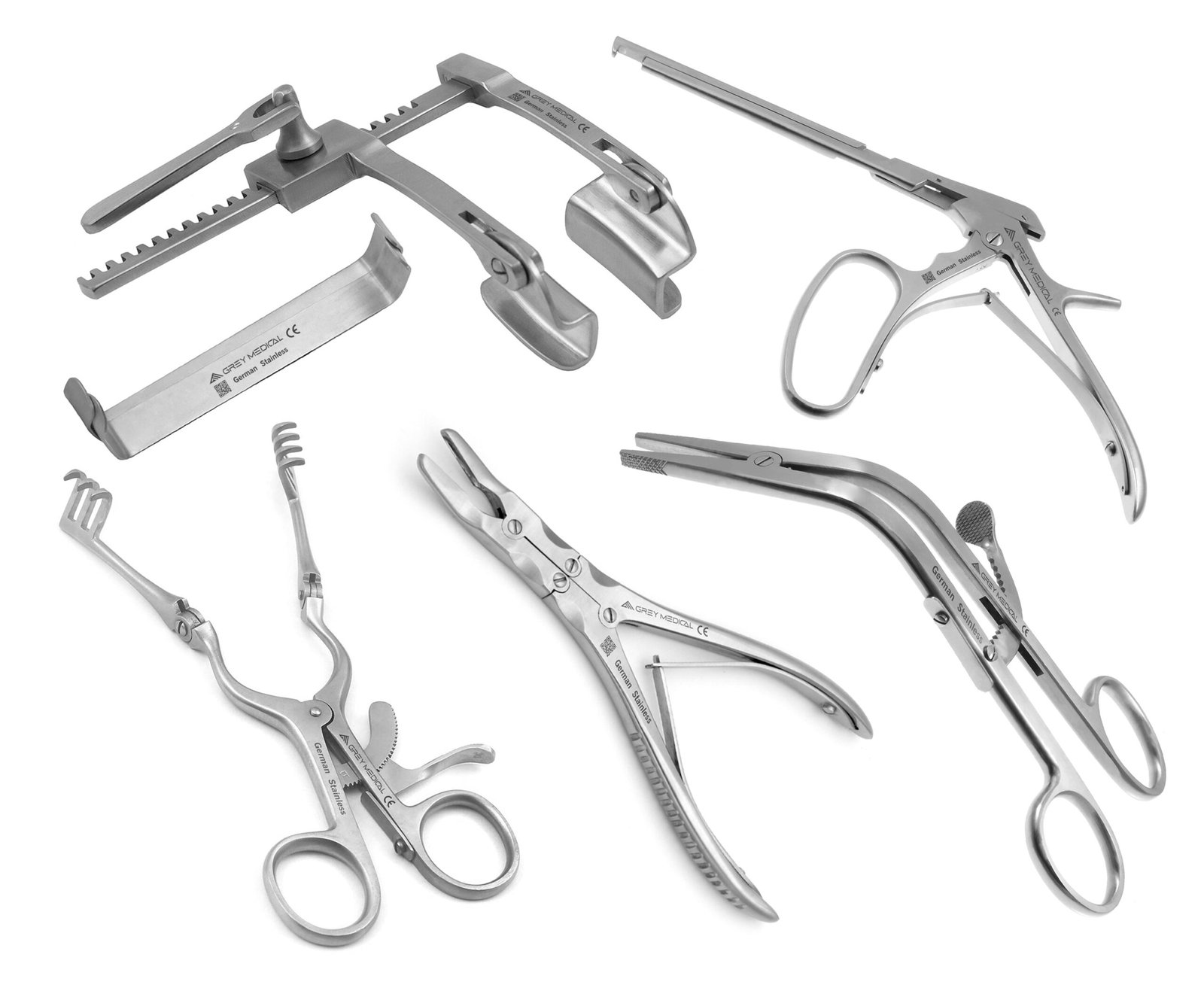
These are fundamental for accessing the surgical site and preparing bone or tissue. Rongeurs, for example, are forceps-like tools with sharp, scoop-shaped tips used to remove small pieces of bone, essential in procedures like laminectomy. Curettes, with their sharp, cupped ends, are employed to scrape and clean bony surfaces, crucial for preparing areas around the spinal cord. Specialized scalpels and scissors are also designed with fine tips and angles for precise tissue incision in the delicate spinal region.
Retractors for Optimal Visualization: Providing a clear view of the surgical field is paramount in spine surgery. Retractors are instruments designed to gently hold back muscles and other tissues, maintaining exposure to the spine. There are various types, from self-retaining retractors that lock into place, freeing the surgeon’s hands, to tubular retractors used in minimally invasive approaches, creating a narrow access tunnel while minimizing muscle disruption. Popular examples include the Caspar Retractor for cervical spine procedures and the McCulloch Retractor for lumbar microdiscectomies, each offering specific advantages for different surgical approaches.
Probes, Drills, and Drivers for Implantation:
When spinal fusion or stabilization procedures are performed, instruments for preparing bone and inserting implants are vital. Probes are used to navigate anatomical landmarks and confirm proper trajectories for screw placement, particularly in pedicle screw fixation. Drills create precise holes in bone, while specialized drivers are used to insert and secure screws and other spinal implants with controlled torque, ensuring stable fixation of the vertebrae.
Specialized Instruments for Complex Procedures:
Beyond the basic categories, many highly specialized instruments cater to the nuances of specific spinal conditions and surgical techniques. Disc space distractors, for instance, are designed to open collapsed disc spaces, facilitating disc removal and interbody cage insertion. Nerve root retractors are meticulously crafted to gently move and protect delicate nerve roots during decompression procedures. Instruments for kyphoplasty and vertebroplasty, used for vertebral compression fractures, involve specialized needles and injection systems to deliver bone cement.
The Future of Spine Instrumentation: Innovation and Precision
The field of spinal surgery is constantly evolving, driven by advancements in instrumentation. Minimally invasive techniques are increasingly prevalent, and the instruments supporting these approaches are becoming more refined, allowing for smaller incisions, reduced blood loss, and faster patient recovery. Robotics and navigation systems are also integrating with traditional instruments, offering surgeons enhanced visualization, real-time feedback, and even greater precision during complex procedures. The development of new materials, such as radiolucent composites, also contributes to improved intraoperative imaging and patient safety. These ongoing innovations highlight a future where spinal surgical instruments continue to push the boundaries of what is possible, offering hope and improved outcomes for patients worldwide.
Conclusion
Spine surgical instruments are the unsung heroes of complex spinal procedures, embodying the pinnacle of medical engineering and precision. From cutting and dissecting tools to highly specialized retractors and implant insertion systems, each instrument plays a critical role in ensuring the safety and effectiveness of spinal interventions. As technology continues to advance, these tools will undoubtedly become even more sophisticated, further enhancing surgical capabilities and improving the lives of individuals suffering from spinal conditions. The commitment to innovation in spine instrumentation underscores the medical community’s dedication to providing the best possible care for spinal health.