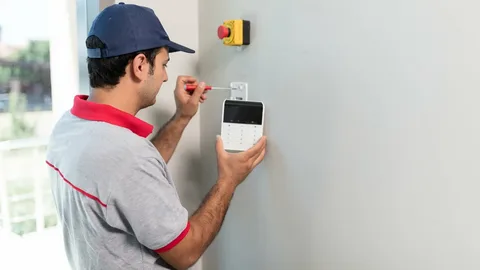
As businesses grow, expand into new cities, or open additional offices and facilities, managing physical security becomes more complex. Controlling who enters and exits each building while maintaining centralized visibility and consistent policy enforcement is a challenge many organizations face. Fortunately, with the right tools and planning, managing access across multiple sites can be both simple and secure.
At XTEN-AV, we help AV professionals and security managers design advanced solutions that support scale, flexibility, and centralized control. In this blog, we will explain how to manage a multi-site Access Control System effectively—from planning infrastructure to implementing smart policies that work across locations.
Why Multi-Site Access Control Is Critical
When your business has more than one location, a fragmented or inconsistent security setup can lead to a number of issues:
Security gaps between sites
Inconsistent access rules or permissions
Difficulties in onboarding or offboarding employees
Poor visibility into access activity
Increased administrative workload
A centralized access control system resolves these challenges by offering a unified platform to manage credentials, users, devices, and logs across all sites.
1. Choose a Cloud-Based Access Control System
The first and most important step is to adopt a cloud-based solution. Unlike on-premise systems that require separate servers for each location, cloud platforms offer:
Centralized management from a single dashboard
Real-time access updates and credential control
Reduced hardware and maintenance costs
Scalability to add new locations easily
With a cloud-based access control system, your security team can oversee every facility—no matter the geography—from any internet-connected device.
2. Standardize Hardware and Policies Across Sites
Consistency is key when managing access across multiple facilities. Standardize your system design so each site uses the same types of:
Readers and credential types (cards, biometrics, mobile)
Door controllers and locks
Entry point labels and room naming conventions
User roles and access levels
This uniformity ensures faster deployment, easier training, and better troubleshooting. It also allows your access policies to scale smoothly across every new site.
3. Centralize User Management and Credentials
A cloud platform makes it easy to manage users across locations. Rather than setting up users in each building individually, you can:
Assign user roles that apply to all or specific sites
Issue global credentials usable at any approved location
Create time-based or location-specific access rules
Instantly revoke access from all sites when needed
For example, a regional manager may need access to five locations, while a delivery driver may be limited to just one. The system should allow you to make these distinctions quickly and clearly.
4. Use Role-Based and Location-Based Permissions
Organizing access permissions by role and location helps keep access rules organized and manageable.
Examples include:
IT staff: 24/7 access to all server rooms across all offices
HR team: Business hours access to admin zones in specific buildings
Vendors: Temporary access to storage rooms in a single warehouse
Executives: Global access with priority credentials
This structure lets you avoid the chaos of assigning individual door access manually for each user.
5. Monitor and Audit Activity Across All Sites
One of the biggest advantages of a unified system is visibility. A centralized dashboard gives you insight into:
Who entered which building and when
Access denied events across all sites
Occupancy trends and zone usage
Suspicious patterns or anomalies
These insights help you identify policy gaps, prevent misuse, and comply with auditing or regulatory requirements.
6. Enable Real-Time Alerts and Notifications
Stay ahead of potential security incidents by setting up automated alerts for:
Unauthorized access attempts
After-hours entries
Door forced open or held open too long
Credential misuse across sites
These notifications can be sent to local site managers or your central security team, allowing for immediate response even if the event happens thousands of miles away.
7. Prepare for Scalability and Expansion
When selecting your access control solution, make sure it can grow with your business. You should be able to:
Add new locations without complex installations
Import and replicate existing access rules
Manage users and devices from one interface
Scale from a few doors to hundreds across sites
XTEN-AV can help you design scalable systems from the start so you avoid rework as your footprint grows.
8. Train Local Staff but Maintain Central Oversight
While central control is important, empowering local staff to handle routine tasks—like issuing visitor passes or managing temporary credentials—can improve efficiency.
However, define clear roles and permissions in your system:
What tasks are allowed at the site level
Who approves global access changes
How changes are logged and tracked
This balanced approach keeps your system secure while reducing the burden on central administrators.
9. Integrate with Other Building Systems
A modern access control system should integrate with:
Video surveillance for visual verification
Alarm systems for coordinated response
Visitor management platforms
HR software for syncing user data
Integration allows your system to be more responsive and intelligent, especially when managing multiple locations with different risk profiles.
10. Use Reporting for Continuous Improvement
Leverage your system’s reporting tools to assess trends and refine your strategy. You can generate reports on:
Access frequency by site
Employee attendance
Visitor history across offices
Credential issuance and deactivation rates
This data supports operational improvements, budgeting, and even HR or legal compliance needs.
How XTEN-AV Supports Multi-Site Access Control Design
XTEN-AV gives you powerful tools to design, document, and manage access control systems across multiple locations. Our platform enables you to:
Build consistent access diagrams for each facility
Choose real-world devices from top manufacturers
Generate accurate wiring layouts and equipment schedules
Collaborate with teams across cities or time zones
Export reports and design packages for stakeholders
Whether you are planning five buildings or fifty, XTEN-AV helps you streamline and scale your access control designs.
Conclusion
Managing an Access Control System across multiple locations does not have to be complicated. With the right cloud-based solution, a standardized approach, and centralized management, you can ensure secure, consistent, and scalable access policies across your entire organization.
By using smart tools like XTEN-AV, you simplify your planning process and empower your team to protect every site without compromising on control or visibility. As your business grows, your security can grow right along with it—strong, connected, and future-ready.
Read more: https://bexopro.com/read-blog/35731