
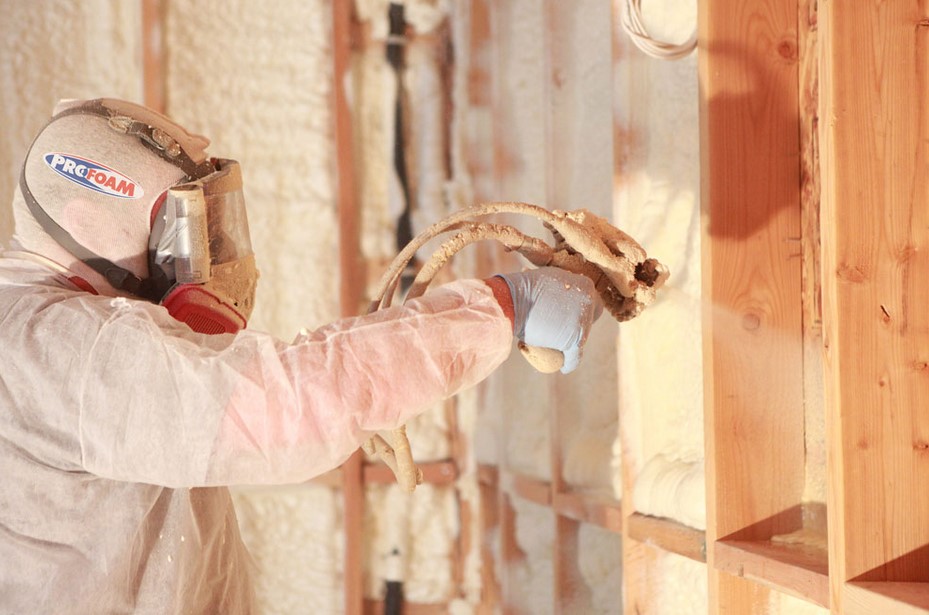
High-performance spray foam services provide one of the most effective ways to insulate residential and commercial buildings. This insulation method seals air leaks, increases energy efficiency, and improves indoor comfort year-round. For homeowners in Central Massachusetts, working with local insulation professionals like Lamothe Insulation and Contracting ensures proper material selection and expert application tailored to New England’s weather conditions.
Lamothe Insulation and Contracting specializes in spray foam insulation and other insulation services designed for long-term performance and comfort. This guide outlines technical details, insulation comparisons, and critical factors to help property owners make informed decisions. It also explains the differences between spray foam types and additional insulation methods suited for a variety of spaces.
Understanding Spray Foam Options
Spray foam insulation is available in two primary forms—open-cell and closed-cell. Each type serves different purposes depending on structure, budget, and thermal goals.
Open-cell spray foam expands rapidly, filling gaps and cracks. It’s ideal for interior walls and attic areas, especially where sound dampening is valuable. Its lower density makes it cost-effective for large coverage but less moisture-resistant.
Closed-cell spray foam is denser and offers a higher R-value per inch. It provides structural reinforcement and water resistance, making it ideal for basements, crawl spaces, exterior walls, and roofs. Closed-cell also acts as a vapor barrier, reducing the need for additional materials.
Other insulation options are available for unique applications or budget-driven choices, which can complement or substitute spray foam depending on the property needs.
Types of Insulation Services Provided by Lamothe Insulation and Contracting
Open-Cell Spray Foam Insulation Flexible and breathable, this foam expands to fill small gaps in wall cavities and ceilings, making it ideal for interior areas where airflow is less of a concern.
Closed-Cell Spray Foam Insulation This high-density foam provides an airtight, water-resistant barrier and is suitable for moisture-prone areas like basements and exteriors, with strong structural reinforcement.
Insulation Removal Outdated, damaged, or contaminated insulation can compromise home performance. Lamothe’s team safely removes existing materials before installing upgraded systems.
Thermal & Intumescent Coatings These protective coatings improve fire resistance and are often required to meet code when spray foam is exposed inside living spaces or commercial buildings.
Blown-In Insulation Made from fiberglass or cellulose, blown-in insulation is ideal for attics or retrofitting wall cavities without major demolition. It provides consistent coverage and decent R-value at a lower cost.
Mineral Wool Insulation Fire-resistant and moisture-tolerant, mineral wool offers strong soundproofing. It’s often used in fire-rated assemblies or multifamily dwellings where safety is a key concern.
Blown-In Cellulose Insulation This eco-friendly material is made from recycled paper treated for fire resistance. It’s dense enough to resist air infiltration and works well in walls and attics.
Dense-Pack Cellulose Blown at higher pressure, dense-pack cellulose fills wall cavities more tightly than standard blown-in materials, improving insulation and reducing drafts in existing homes.
Spray Foam Comparison Table
Feature | Open-Cell Spray Foam | Closed-Cell Spray Foam | Blown-In Cellulose | Mineral Wool Insulation |
|---|---|---|---|---|
R-Value per Inch | ~3.6 | ~6.5–7 | ~3.5 | ~4.2 |
Air Seal Quality | Excellent | Superior | Moderate | Moderate |
Moisture Barrier | No (absorbs moisture) | Yes (moisture-resistant) | No | Yes |
Application Areas | Interior walls, soundproofing | Roofs, exteriors, foundations | Attics, wall cavities | Fire-rated zones, sound walls |
Rigidity | Soft/flexible | Rigid, adds structural strength | Loose-fill | Rigid batts |
Best For | Sound control, budget-sensitive | Maximum efficiency, moisture-prone areas | Retrofit jobs | Fire resistance, sound barriers |
Technical Data Table
Specification | Open-Cell Spray Foam | Closed-Cell Spray Foam |
|---|---|---|
R-Value per Inch | 3.5–3.7 | 6.0–7.0 |
Expansion Rate | High (~100x) | Moderate (~30–40x) |
Vapor Permeability | High | Low |
Water Absorption | Absorbs water | Resists water |
Structural Strength | Low | High (20–30 psi) |
Application Thickness | 3–5 inches | 1–2 inches |
Sound Absorption | High | Moderate |
Fire Rating (with coating) | Required coating | Required coating |
What to Consider Before Choosing Insulation
Choosing the right insulation depends on how the building performs, the type of spaces being insulated, and how much control you need over air, moisture, and noise.
Start with the structure itself. Older homes often have limited cavity space and may require materials like dense-pack cellulose that fill existing areas without major tear-out. New homes benefit from spray foam during construction, especially in attics and basements where controlling heat flow and moisture is critical.
Next, consider exposure. Closed-cell spray foam is the top choice for damp basements or crawl spaces, while open-cell works well in conditioned interior spaces where breathability and sound control are needed.
Budget also matters. While closed-cell foam has a higher upfront cost, it delivers long-term savings through better thermal performance and moisture protection. Blown-in or cellulose insulation may suit tighter budgets or short-term renovations.
Think about long-term maintenance and energy goals. Insulation isn’t just about now—it’s about how the home performs for decades.
Tip: Insulate in layers. Use spray foam in high-performance zones like basements or attic hatches, and complement with blown-in insulation in wider attic spaces for balanced cost and efficiency.
Common Questions
Can I install spray foam in just part of my home?
Yes. Many homes benefit from targeted application. For instance, closed-cell foam can be used in the basement to stop moisture, while cellulose is used in attic spaces to manage heat loss.
Do I need to remove old insulation before spray foam?
In many cases, yes. Old or damaged insulation reduces spray foam’s effectiveness and can trap moisture or mold. Lamothe Insulation offers professional insulation removal as part of the upgrade process.
What kind of coating do I need for fire protection?
Spray foam in exposed areas, especially in basements or garages, must be covered with a thermal or intumescent coating to meet fire safety codes. Lamothe Insulation applies these coatings to ensure compliance.
Can spray foam reduce noise?
Open-cell foam in walls or ceilings significantly reduces sound transfer. It’s a good solution in shared wall units or bedrooms near mechanical areas.
How quickly can insulation be installed?
Most projects take one to two days, depending on the area and material. Spray foam requires a curing period, after which the space can be safely reoccupied.
FAQ
How does spray foam differ from traditional insulation? Spray foam expands on contact to seal cracks and air gaps, whereas fiberglass or cellulose simply fills space. This air sealing greatly improves efficiency.
Is spray foam insulation safe indoors? Yes, once properly installed and cured, spray foam is safe and does not release harmful fumes. It’s critical to use certified insulation personnel for proper handling.
Does spray foam add structural support? Closed-cell foam increases wall strength due to its density. It’s often used in high-wind zones or areas needing added structural rigidity.
Will insulation help reduce moisture in the home? Yes. Closed-cell foam acts as a vapor barrier and blocks humidity, making it ideal for basements, crawl spaces, and bathrooms.
Is spray foam environmentally friendly? New formulations are more eco-conscious, with reduced emissions and recyclable packaging. Spray foam also lowers energy consumption over time, reducing environmental impact.
Conclusion
Spray foam services offer long-term performance, air sealing, and energy savings that other materials cannot match. Choosing the right insulation contractor starts with understanding your building’s specific needs—from moisture protection to thermal efficiency to fire code compliance. Whether you’re sealing an attic, insulating a new home, or replacing aging insulation, Lamothe Insulation and Contracting provides reliable, localized service across Massachusetts.
Their range of insulation services—including spray foam, blown-in, mineral wool, and cellulose options—ensures every homeowner finds a solution that fits their goals and budget. Spray foam isn’t one-size-fits-all, but with the right materials and expert guidance, it’s one of the smartest ways to enhance building performance.
Ready to Achieve Maximum Energy Efficiency?
Apply these insights now: Schedule your custom insulation evaluation with Lamothe Insulation and Contracting, your trusted local insulation expert serving Central Massachusetts.
Contact Information Phone: (508) 847-0119 Email: [email protected]
Author and Reviewer:
Author: With over two decades of hands-on experience, Robert Lamothe, owner and lead installer of Lamothe Insulation, brings unparalleled expertise in spray foam insulation, carpentry, and building science. Since 2002, he has earned a reputation for precision, quality craftsmanship, and delivering energy-efficient solutions that stand the test of time. Lamothe Insulation is a family-owned and family-operated business, and Robert also owns the Goddard School of Auburn, an early childhood education school.
Reviewer: Ethan Taylor has 8 years of experience in spray foam insulation. He reviewed this content and suggested ways to simplify business outreach while keeping trust and professionalism intact.






