
Animation truly depends on comedic storyboarding and storyboard templates to create extraordinary entertainment which merges visual methods with humor. Animation requires specific mastery of timing with visual communication and storytelling ability which creates entertaining visual scenes that entertain viewers effectively. Animators aspiring to become storytellers can access better creative opportunities when they refine their comedic storyboarding abilities to create content which finds deep connections with viewers through emotions and humor.
The Cornerstone of Visual Comedy
Animated comedy requires more than scripting and creating funny characters because expert presentation of jokes through sequencing determines how well the gags come across. Visual portraiture and execution in sequential progress determine the entire reaction to a joke. A comedic storyboard plays an essential part in animation since it creates this foundation through precise visualization of each visual gag’s progression between frames. A comedic storyboard also serves as a crucial reference for the production team, ensuring that each visual gag is executed as planned.
Effective visual humor is built upon universal principles that go beyond linguistic and cultural boundaries. The physical comedy that was first introduced in the silent movie era by icons such as Charlie Chaplin and Buster Keaton still leaves an impact on contemporary animated comedies. These ageless techniques – exaggeration, incongruity, and surprise – remain essential resources for those in charge of creating humorous storyboards.
The Technical Aspects that Contribute to the Humor
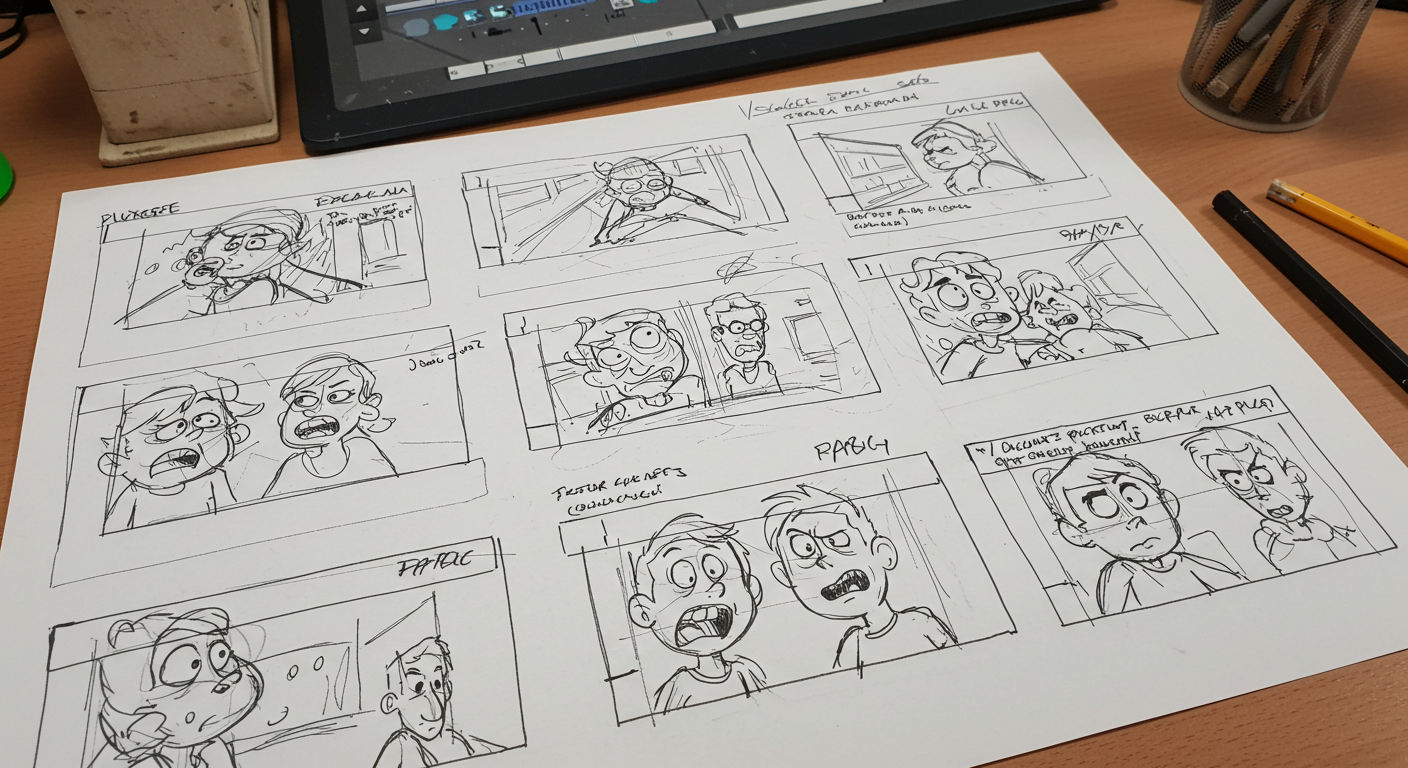
The effectiveness of comedic storyboarding demands artists to have capabilities surpassing simple drawing know-how, especially when it comes to action scenes. The artist needs both technical and artistic understanding of camera techniques that let them maximize the impact of their comedic storyboarding work. The mixture of close-up camera work on shocked faces and vast scenes portraying surprise situations enhances the comedy significantly.
The timing requirements for comedy work specifically in storyboarding affect how a comic sequence develops intrinsically when adjusting panel length. The artist responsible for the storyboard must carefully decide the duration of each beat, strategically pause for maximum impact, and accurately time the delivery of the punchline. This rhythm in visuals, combined with well-timed dialogue, serves as the foundation of the humor, providing direction to animators and directors on how to smoothly execute the final sequence.
The Art of Comedic Acting and Portraying a Character’s Expression go hand in hand
The heart of an animated story lies in its characters, whose expressions and movements hold great significance in comedy. Storyboard artists turn into visual actors before they create successful comedic storyboards because they need full understanding of how characters express emotions physically while performing comedy. This skill is equally important in creating engaging comic strips.
The enhanced visualizations of animated characters suit the humorous content in comic storyboards by serving as essential elements to create comedy.
Small facial expression adjustments by a character between confusion and bewilderment or from startling to terror create entirely different comic effects. For storyboarding artists to enhance the comedy effectively they need to maintain proper levels of exaggeration and character consistency that preserves audience comprehension.
Developing Narrative Using Clever Visual Cues
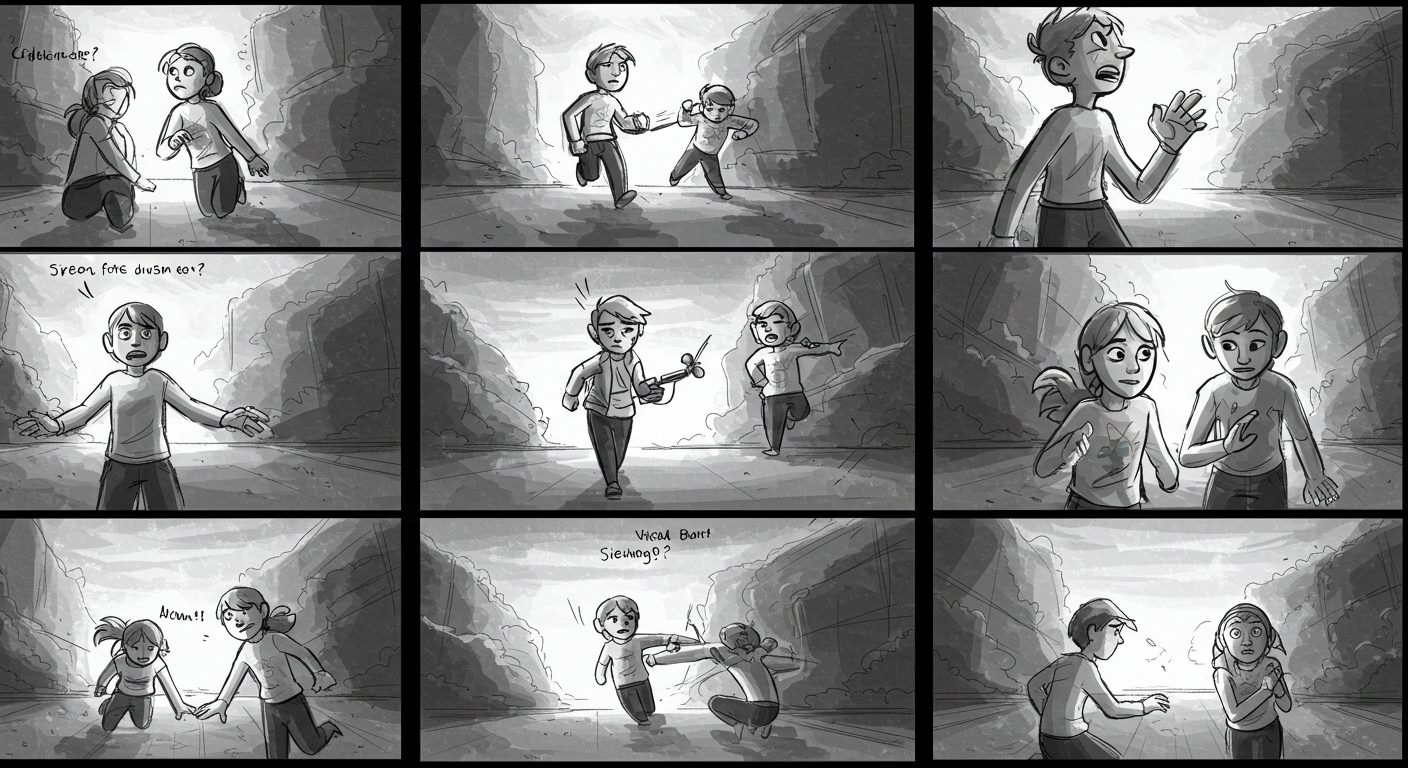
Stand-alone comedy does not exist as an entity since it functions as an essential storytelling component. The best way to add humor into storytelling consists of natural flow integration that uses visual comedy to advance plot points and display character features as well as reinforce important themes. Artists with talent supplement their projects with natural humor that matches their established environments as well as their characters, allowing them to effectively visualize the comedic elements.
Through narrative comedic storyboarding one achieves an intricate type of entertainment that operates on multiple layers. Visual gags incorporated smoothly into the plot enable audience engagement at different levels because it allows them to understand the narrative and experience enhanced entertainment value.
Learning Through Professional Guidance
Structured classes, such as the Comedic Storyboarding for Animation course at Gage Academy, offer essential support and practice for individuals seeking to enhance their skills in this specialized industry. The class specifically teaches students to master the critical combination of comedy techniques with storytelling visuals. Students learn under expert supervision to develop storyboard competencies for delivering comedic content which follows animation production standards, including the effective use of different shots to enhance comedic timing.
Through comprehensive instruction students get both instructive theoretical concepts and practical training that enables them to advance their unique comic art and develop their storyboard abilities. Creative artists greatly benefit from professional guidance because specialists deliver important evaluations about time usage and drawings together with storytelling elements.
The Progression of Comedic Storyboarding
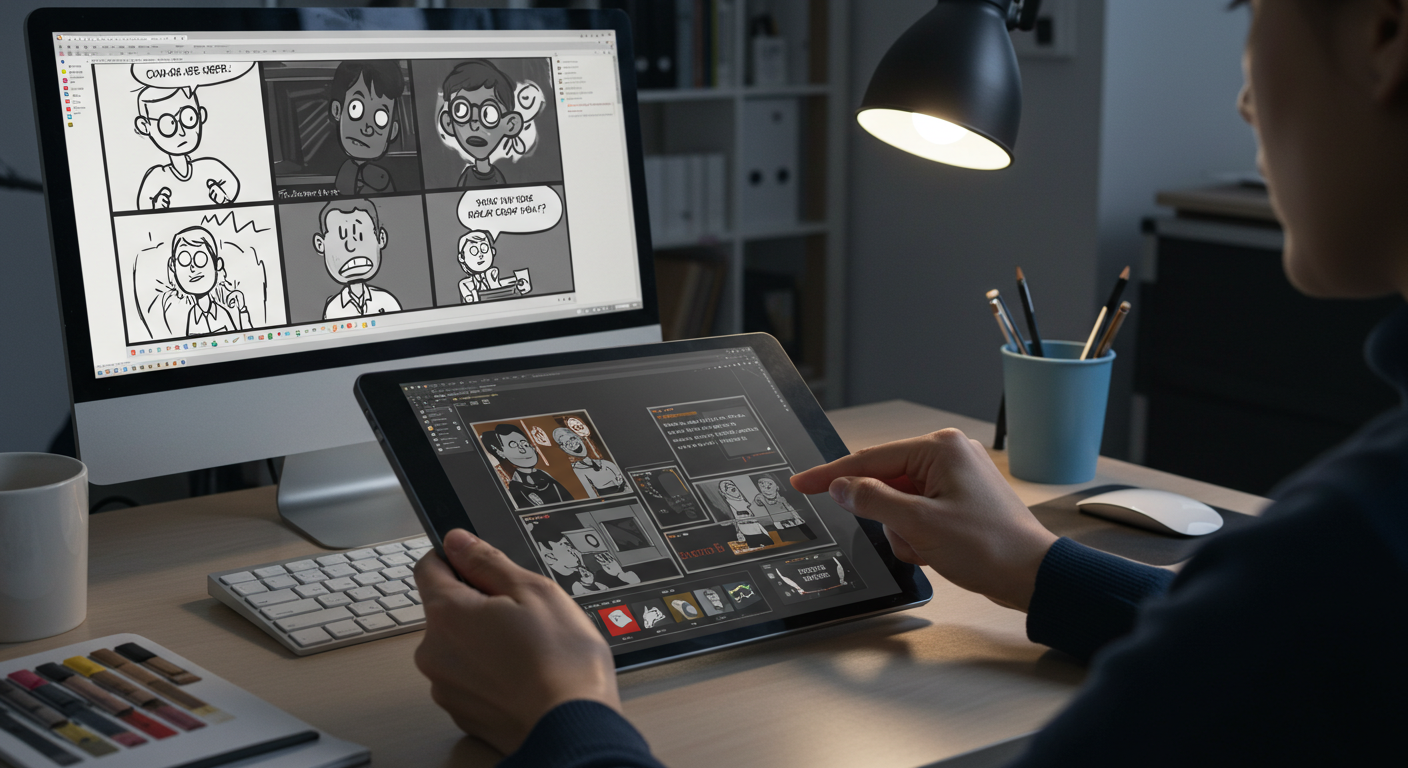
As animation evolves across different mediums, from feature films to social media content, comedic storyboarding must also adapt. Today’s storyboard creators need to understand how laughter affects different viewing situations coupled with audience comedic anticipations.
The storyboarding process for artists became more efficient through digital tools that enable them to test timing as well as transitions and effects. The achievement of this goal happens through templates designed for customization, making the process both productive and fun. While basic comedic principles remain unaltered their fundamental principles continue to preserve their original form. The fundamental principle of successful comedic storyboarding derives from comprehension of human laughter mechanics.
Cultural Considerations in Visual Humor
A unique challenge in humorous storyboarding exists in determining cultural interpretation of comedy elements. Visual gags possess broader preference across cultures yet viewers require particular cultural understanding for a complete comprehension of comedic content. Storyboard artists of high skill demonstrate their knowledge of cultural differences by using common human experiences which everyone can relate to, bringing characters and themes to life.
In the realm of global content, artists who possess the ability to infuse visual humor with universal appeal are highly sought after by studios. This becomes even more crucial as animation companies seek to expand their reach through international streaming services.
The Collaborative Approach to Creating Animated Comedy
As storyboard artists set the foundation for visual humor, the end result of the animation is achieved through teamwork. Each member starting from directors to animators and voice actors and sound designers helps to realize the comedic ideas of the production, much like the collaborative efforts in creating a comic book. The understanding of elements working as a team enables storyboard artists to produce panels which effectively express messages to the entire production team.
The most effective comedic storyboards strike a balance between conveying the joke’s mechanics with appropriate room for collaboration and input from other team members. This collaborative approach sets professional storyboard artists apart from those who work independently.
Cultivating Your Humorous Storytelling Style
Entry into the competitive humorous storyboard art business requires artists to develop exclusive artistic style and comedic approach that stands out from others. Consistent practice and media exploration along with expert and peer feedback help students achieve professional growth in the industry. Proficiency in tools like Photoshop also plays a crucial role in this development.
Student development of their distinctive artistic voice takes place through Gage Academy’s specialized animation storyboarding program under expert educational support. The educational program guides students through developing their abilities with practice-based activities and production tasks. Through these methods students develop skills which let them express their sense of humor in systematic visual elements that production crews understand.
The evolution of entertainment industry supports the dynamic and rewarding practice which unites artistic abilities with comedic humor for story transmission. Those who specialize in this craft dedicated to visual communication and comedy can create laughter across the world by using visual humor to overcome cultural boundaries.




